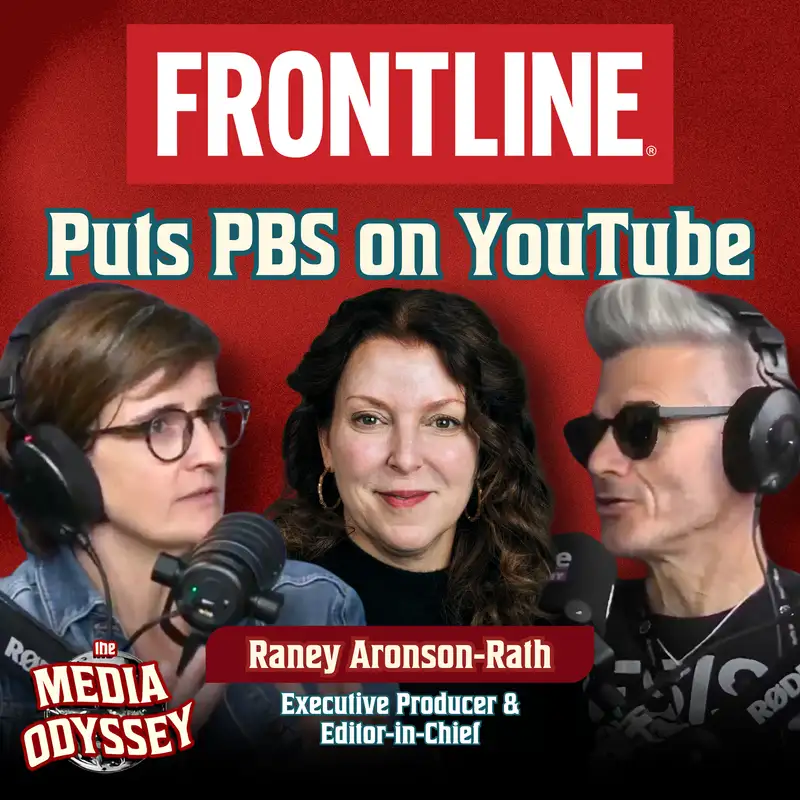
FRONTLINE PUTS PBS ON YOUTUBE
Download MP3Public service media isn’t outdated, instead, it’s fighting for relevance, trust, and survival in a fractured global information ecosystem.
Welcome back to The Media Odyssey Podcast. In this episode, Evan Shapiro and Marion Ranchet sit down with Raney Aronson-Rath, Executive Producer of Frontline and Editor-in-Chief of Documentaries at GBH, for a conversation on the future of public media. From political pressure and funding cuts to platform expansion and audience trust, the discussion explores why public broadcasters must be everywhere audiences are without sacrificing journalistic integrity.
Through Frontline’s transformation into a broadcast-plus-streaming powerhouse, the episode examines how YouTube, social video, theatrical releases, and global distribution have become essential tools for sustaining factual storytelling in an era of misinformation and declining institutional trust.
Key Takeaways:
1. Public Media’s Survival Depends on Platform Expansion, Not Retrenchment
Public broadcasters can no longer rely solely on linear TV. To stay relevant and trusted, they must meet audiences on YouTube, social platforms, streaming, and in theaters. They need to be wherever public conversation is happening.
Public broadcasters can no longer rely solely on linear TV. To stay relevant and trusted, they must meet audiences on YouTube, social platforms, streaming, and in theaters. They need to be wherever public conversation is happening.
2. YouTube Is Additive, Not Cannibalistic for Public Service Media
Frontline’s experience shows that YouTube doesn’t replace broadcast audiences. In fact, YouTube extends reach over time, attracts younger viewers, and builds long-tail viewership that linear TV alone cannot sustain.
Frontline’s experience shows that YouTube doesn’t replace broadcast audiences. In fact, YouTube extends reach over time, attracts younger viewers, and builds long-tail viewership that linear TV alone cannot sustain.
3. Streaming Requires a Long-Term Mindset Shift
Unlike broadcast’s appointment viewing, streaming rewards longevity. Frontline films often grow for years, accumulating millions of views with high watch time, forcing teams to think beyond premiere-night metrics.
Unlike broadcast’s appointment viewing, streaming rewards longevity. Frontline films often grow for years, accumulating millions of views with high watch time, forcing teams to think beyond premiere-night metrics.
4. Community and Trust Are the Core Competitive Advantages
Public media’s strength isn’t scale but credibility. Building engaged, thoughtful communities around factual content is essential in a media ecosystem flooded with misinformation.
Public media’s strength isn’t scale but credibility. Building engaged, thoughtful communities around factual content is essential in a media ecosystem flooded with misinformation.
5. Short-Form Is Editorial, Not Promotional
To reach younger audiences, Frontline treats social video and shorts as a serious journalistic format with its own language instead of marketing cutdowns of long-form work.
To reach younger audiences, Frontline treats social video and shorts as a serious journalistic format with its own language instead of marketing cutdowns of long-form work.
6. Global Distribution Is Both a Mission and a Strategy
With one-third of Frontline’s audience outside the U.S., platforms like YouTube enable public media to reach global audiences including countries where traditional broadcasters refuse to air critical journalism, but where audiences need to see it most.
With one-third of Frontline’s audience outside the U.S., platforms like YouTube enable public media to reach global audiences including countries where traditional broadcasters refuse to air critical journalism, but where audiences need to see it most.
7. Public Media Must Be Everywhere Both In Person and Online
From YouTube to theaters to festivals, Frontline Features reflects a belief that storytelling is more powerful when audiences can experience it both collectively and individually.
From YouTube to theaters to festivals, Frontline Features reflects a belief that storytelling is more powerful when audiences can experience it both collectively and individually.
8. The Cost of Absence Is Being Replaced by Worse Information
If trusted public media doesn’t fill digital spaces, misinformation will. The choice isn’t whether to engage platforms like YouTube, it’s whether to leave them to actors with lower standards.
If trusted public media doesn’t fill digital spaces, misinformation will. The choice isn’t whether to engage platforms like YouTube, it’s whether to leave them to actors with lower standards.
Interested in sponsorship? https://forms.gle/2LCWfX2HBNT8mtpx8
Connect with us on Linkedin:
Evan Shapiro - https://www.linkedin.com/in/eshap-media-cartographer/
Marion Ranchet - https://www.linkedin.com/in/marionranchet/
The Media Odyssey Podcast - https://www.linkedin.com/company/the-media-odyssey-podcast
Thank you, Raney Aronson-Rath for joining the pod!
Raney Aronson-Rath: https://www.linkedin.com/in/raney-aronson-0343aa8/
Frontline: https://www.linkedin.com/company/frontline-pbs/
Headshot credit: Michael Buckner/Deadline
- (00:00) - Introduction to the Media Odyssey Podcast
- (00:09) - Public Media Under Pressure
- (00:55) - BBC Controversy and Public Trust
- (02:58) - Challenges Faced by Public Broadcasters
- (04:02) - Public Media Funding Issues
- (04:47) - The Role of Public Media in Democracy
- (05:59) - Public Broadcasting in the US
- (07:25) - Embracing Digital Platforms
- (09:13) - Introducing Raney Aronson from Frontline
- (11:16) - Frontline's Digital Transformation
- (15:43) - Impact of YouTube on Frontline's Reach
- (23:56) - Simultaneous Broadcast and Streaming Strategy
- (26:22) - The Evolution of PBS Viewership
- (27:10) - Leadership and Digital Expansion
- (28:08) - Global Reach and YouTube Strategy
- (29:05) - Commitment to Journalistic Standards
- (31:14) - Frontline Features and Theatrical Impact
- (34:18) - Challenges in Documentary Distribution
- (39:42) - International Co-Productions and Self-Distribution
- (43:44) - The Importance of Public Media
Creators and Guests
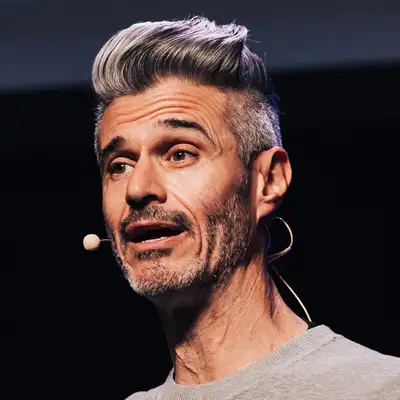
Host
Evan Shapiro
Based in the US, Evan Shapiro is the Media Industry’s official Cartographer, known for his well-researched and provocative analysis of the entertainment ecosystem in his must read treatises on Media’s latest trends and trajectories.

Host
Marion Ranchet
Marion Ranchet, French expat based in Amsterdam, has become the industry’s go-to expert in all things streaming, building a following for turning even the most complex problems into easily digestible and actionable insights.