AI SLOP, GATEKEEPERS, AND THE KID'S MEDIA CRISIS
Download MP3Demand for high-quality kids' content has never been higher, but the supply has never been more broken. And YouTube, the most powerful kids' platform on Earth, is running it like an algorithm, not a network.
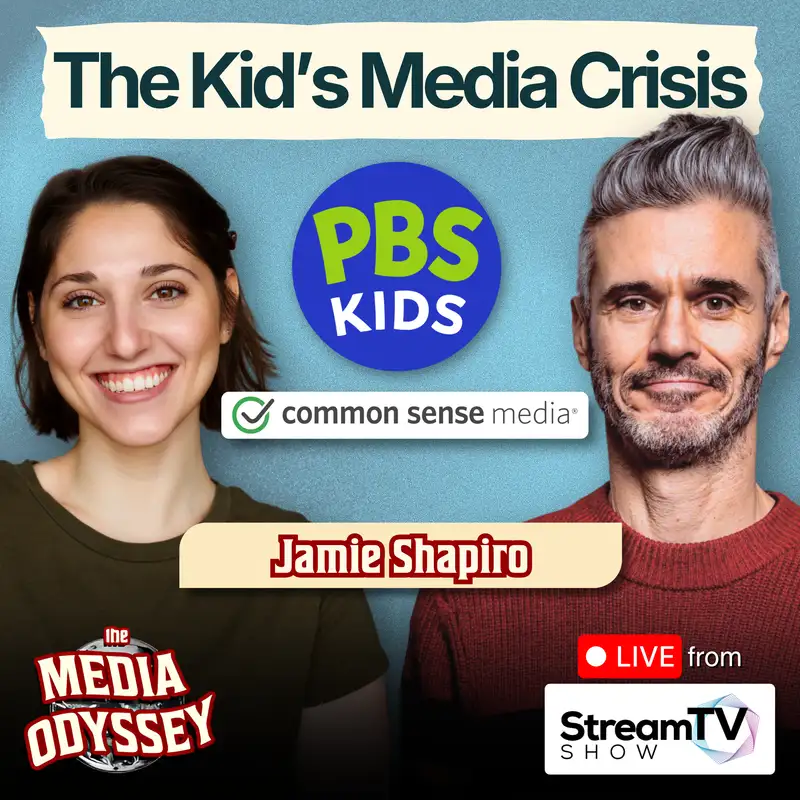
This live panel episode of the Media Odyssey Podcast, recorded at the Media Universe Summit, features Evan Shapiro and Jamie Shapiro alongside Andy Donner, Head of Partnerships at Common Sense Media, and Sara DeWitt, Senior Vice President & General Manager at PBS Kids. The conversation centers on Evan and Common Sense Media's joint report on the state of the kids' content industry.
The picture it paints is stark with millennial and Gen Z parents demanding more high-quality, trusted kids' content than ever, while streaming platforms have cut series orders by 25%, public media is being defunded, and YouTube Kids remains under-monetized and under-curated despite being the most-watched kids' platform in the world. The panel covers co-viewing trends, the collapse of the independent kids' production ecosystem, the rise of AI slop in children's content feeds, and what it would actually take for a major streamer or YouTube to step up and fill the gap.
Key Takeaways:
1. Supply vs. Demand
Demand for quality kids' content has doubled among parents (70% of whom are now millennials or Gen Z) while the number of series orders from streamers has dropped 25% from its 2022 peak. Streamers figured out kids' content reduces churn but doesn't drive new subscribers, and largely stopped commissioning it. Public broadcasters like PBS, BBC, and ABC Australia now produce 54% of kids' content worldwide.
Demand for quality kids' content has doubled among parents (70% of whom are now millennials or Gen Z) while the number of series orders from streamers has dropped 25% from its 2022 peak. Streamers figured out kids' content reduces churn but doesn't drive new subscribers, and largely stopped commissioning it. Public broadcasters like PBS, BBC, and ABC Australia now produce 54% of kids' content worldwide.
2. The YouTube Kids Problem
88% of parents of kids under seven say their children prefer YouTube over any other platform, yet kids' content represents 15% of total YouTube usage and just 2% of its monetization. YouTube Kids has the lowest co-viewing rate of any major platform and AI-generated slop is regularly making it through content filters. The American Academy of Pediatrics warns YouTube is actively harming children's development.
88% of parents of kids under seven say their children prefer YouTube over any other platform, yet kids' content represents 15% of total YouTube usage and just 2% of its monetization. YouTube Kids has the lowest co-viewing rate of any major platform and AI-generated slop is regularly making it through content filters. The American Academy of Pediatrics warns YouTube is actively harming children's development.
3. The Algorithm Gap
COPPA enforcement removed an estimated $2 billion from the kids' content marketplace, primarily from YouTube. Streamers that stopped commissioning original kids' content are now inadvertently driving young viewers to YouTube. PBS Kids saw 40% YouTube growth simply by launching content globally and allowing international ads, because global distribution signals demand to the algorithm and lifts domestic reach.
COPPA enforcement removed an estimated $2 billion from the kids' content marketplace, primarily from YouTube. Streamers that stopped commissioning original kids' content are now inadvertently driving young viewers to YouTube. PBS Kids saw 40% YouTube growth simply by launching content globally and allowing international ads, because global distribution signals demand to the algorithm and lifts domestic reach.
4. Co-Viewing Is Back and Underserved
Co-viewing has surged since COVID, with the desire to watch content together as a family now ranking as the top thing parents say they don't want to lose from the pandemic period. Research shows kids learn significantly more when a parent or sibling is present. But fragmented subscriptions, too few family-friendly titles, and algorithm-driven autoplay leave a commercial gap for any platform willing to program for the whole family.
Co-viewing has surged since COVID, with the desire to watch content together as a family now ranking as the top thing parents say they don't want to lose from the pandemic period. Research shows kids learn significantly more when a parent or sibling is present. But fragmented subscriptions, too few family-friendly titles, and algorithm-driven autoplay leave a commercial gap for any platform willing to program for the whole family.
5. YouTube Needs to Run Kids Like a Network
The panel's clearest call to action: YouTube should treat YouTube Kids as a curated network, not an algorithm. That means human curation, better revenue sharing for kids' content creators, global distribution partnerships, and taking its developmental responsibility seriously. YouTube would make more money doing it, and the goodwill from parents and educators would be commercially valuable in its own right.
The panel's clearest call to action: YouTube should treat YouTube Kids as a curated network, not an algorithm. That means human curation, better revenue sharing for kids' content creators, global distribution partnerships, and taking its developmental responsibility seriously. YouTube would make more money doing it, and the goodwill from parents and educators would be commercially valuable in its own right.
Thank you Andy Donner and Sara DeWitt for joining the pod!
Andy Donner - https://www.linkedin.com/in/andydonner/
Sara DeWitt - https://www.linkedin.com/in/saradewitt/
Interested in sponsorship? https://forms.gle/2LCWfX2HBNT8mtpx8
Connect with us on Linkedin:
Evan Shapiro - https://www.linkedin.com/in/eshap-media-cartographer/
Marion Ranchet - https://www.linkedin.com/in/marionranchet/
The Media Odyssey Podcast - https://www.linkedin.com/company/the-media-odyssey-podcast
- (00:00) - Introduction to Kids' Content Landscape
- (02:50) - The Supply and Demand Crisis in Kids' Media
- (09:45) - The Co-Viewing Phenomenon and Its Impact
- (14:04) - Legacy Brands vs. New Creators in Kids' Content
- (20:50) - The Role of YouTube and Content Curation
- (24:01) - Monetization Challenges and Opportunities in Kids' Media
Creators and Guests

Host
Evan Shapiro
Based in the US, Evan Shapiro is the Media Industry’s official Cartographer, known for his well-researched and provocative analysis of the entertainment ecosystem in his must read treatises on Media’s latest trends and trajectories.

Host
Marion Ranchet
Marion Ranchet, French expat based in Amsterdam, has become the industry’s go-to expert in all things streaming, building a following for turning even the most complex problems into easily digestible and actionable insights.